Showing posts with label american history. Show all posts

Thursday, 25 February 2016

Reel History 15: Oil and the Wrath of God: There Will Be Blood


Oil and the Wrath of God: There Will Be Blood

"I have a competition in me; I want no one else to succeed."
Daniel Plainview


"What is the chief end of man?--to get rich. In what way?--dishonestly if we can; honestly if we must."

Mark Twain, 1871


"Whoever loves money never has enough;
whoever loves wealth is never satisfied with their income.  
This too is meaningless."
Ecclesiastes 5:10


There Will Be Blood is a deeply religious epic. It does not comment on metaphysics, and though our pastor antagonist is made to proclaim that God is a superstition, the movie doesn't care to make an argument for or against this statement. What it is is a commentary on the advancement of America's religious society, and what happens when greed bludgeons God to death with a bowling pin. But I'm getting ahead of myself. 

The pantomime currently playing out on America's right is the movie's lessons in action. Candidates are racing to humble themselves unto the voting consumer, hoping to be seen as the most authentic Christian free marketeer. The former label is losing its power this electoral season, and not because of any secular conspiracy to sand-blast God off every public monument. Those who are offering themselves as God's preferred candidate are being left behind in a cloud of acceptable bigotries and faux-history, the very things they helped popularize. Ted Cruz says that "any president who doesn't begin his days on his knees isn't fit to be president," his wife adding that "the God of Christianity is the God of freedom, of individual liberty, of choice and of consequence." Meanwhile, Donald Trump is winning primary after primary, mumbling out some form of religiosity as much to protect his personal brand from his own past as to get the Christian vote. He doesn't really need to, though, because he's covered nicely by playing to the base's inherent hatred for Muslims and Mexicans. Trump and Cruz and the rest of them perpetuate the fiction that individuality and enterprise are Christian principles, while the collective is still in need of protection from the secular and un-Biblical, which are deemed "un-American." Trump just doesn't feel the need to humble himself to any god that isn't himself, the Christianity of America making it easy for this billionaire to get away with it. Regardless of its outcome, these candidates continue a century's old political game, and There Will Be Blood is a fable about this game's beginning. 

The movie is about the rise and fall of Daniel Plainview (Daniel Day-Lewis), a silver prospector turned oil magnate whose ambition is only matched by his nemesis, Eli Sunday (Paul Dano). Sunday runs the church on his family's property, a property that sits on an "ocean of oil." The competition between the two, and their many attempts to control the other, form the dramatic basis of the movie. But does the movie's writer and director, Paul Thomas Anderson, say it's about?

"The politics of power, amassing power, amassing wealth," he told Marc Maron on the WTF podcast. "What's the difference between survival and ambition? They are born with something above and beyond. You feel there was never going to be enough. The agreement between the godless and the faithful, struck a bargain, but always suspicious. [It's] the birth of American industry, and the hustle is a part of that."

This hustle, this agreement between the godless and the faithful, can trace its beginning to two men who gained wealth and power despite their religion, not because of it. California was the place for new religious movements in the early 20th Century, as mass migration gave many a preacher and snake oil salesman new audiences. But it wasn't so much the migrants moving into California that gave modern American Protestantism the resources it needed to thrive and spread, rather the wealth that was in the ground. Currently, the state is third in American oil production, behind Texas and North Dakota, but in 1903, it was the leading state. The late 1800s saw a boom in oil production and a scramble for land, and by 1920, seven years before TWBB's conclusion, production had reached 77 million barrels. Oil was, and is, big business in California.

This big business was behind a major series of essays published by the Bible Institute of Los Angeles, authored by some of the leading Protestant theologians of the time. These were a stirring defence of conservative Christianity in the face of a number of ungodly movements: modernism, historical criticism, evolution, etc. Three million books were distributed, for free, to church leaders around the county, setting the course for the militancy of American Christian fundamentalism and the acceptable opinions of the future. "These books were a public symbol of the coherence and continuity of the interdenominational movement known as conservative Protestant evangelicalism," says the institute, now known as Biola University, of their crowning achievement, The Fundamentals. They provided the intellectual basis for a movement that would find a larger audience with the First Red Scare, when people clung to religion and free enterprise as antidotes to godless Bolshevism.  

Supporting Biola University and The Fundamentals were two brothers, Lyman and Milton Stewart. They had made their money in the Union Oil Company of California, and they meant to use it for God. Out of their influence came a new generation of theologians who opposed modernism and supported Christian governance. Attempting to spread their very conservative evangelicalism, Milton funded missionary work in China; it was Lyman who had the most impact on the United States. In addition to The Fundamentals, he published and distributed William Eugene Blackstone's Jesus is Coming, a book that helped popularize a Biblically literal, Zionist millennialism. Millennialism is the belief that Christ will come back and literally rule a Messianic kingdom on earth for a thousand years, and without this belief, "there could not possibly be a Billy Graham, Oral Roberts, PTL Club, Jerry Falwell, and Moral Majority, or any of a myriad of similar personages and movements," says Gary Wills in his book Head and Heart: A History of Christianity in America. Without the Stewarts, there could not possibly have been millennialism.


It's into this history that There Will Be Blood digs deep. The director is sort of obtuse about the philosophy behind TWBB, but if it has a political motivation, I would interpret it as saying that the brothers Stewart have failed and were always doomed to fail. To combine wealth and power with the inherent humility of Christianity is a flawed plan, one that only helps the wealthy. Two scenes betray this message, and they are connected thematically by the force of the Third Movement of Brahms' Violin Concerto in D Major, Opus 77. 


The first begins with Eli asking Daniel his permission to bless the newly erected oil well; Daniel agrees to mollify Eli and his church, but at the last minute usurps his prayer dedication, instead taking the time to make a pointed reference to Eli's abusive father. This is the first instance of direct conflict between Daniel and the church, and the back and forth becomes increasingly desperate as they try and get what they need from the other. Daniel even agrees to be baptized in order to obtain a crucial parcel of land owned by one of the congregation's most devout members. It's a scene that not only shows Daniel's deviousness, but also the movie's sense of humour, which I don't think gets enough credit. 


The second scene I'm referring to ends the movie: Eli, who has been out of Daniel's life for many years on "mission work," returns to the secluded millionaire a penitent sinner, grovelling for a deal that would give him the money he needs to continue his work. Instead of money, Daniel gives him a cold truth: he "drank his milkshake", sucking the oil right from under Eli's land. He then bludgeons the snivelling Eli to death with a bowling pin, the pastor simply an annoyance to him now. "I'm finished," he tells his butler in weary triumph, the final words of the movie moving right into Brahms. It's a powerhouse finale. 


Warning: this one's a teensy bit brutal. 

It's a finale that resonates today. The Protestant elite of the Seventies and Eighties, those ancestors of The Fundamentals, believed that by controlling the political discourse, they could make the sin of greed a virtue. TWBB dismisses all this as foolhardy and evil. American Christian culture has paved the way for someone like Donald Trump, who only has to fake his way through a baptism to get that much-coveted land. The recent scuffle between Trump and His Holiness Pope Francis, promptly followed by Trump winning the Evangelical vote in South Carolina, highlights what makes American Christianity a different take on religion altogether. It believes that wealth can be subjugated and turned into a useful tool to spread the good news.

After all, America is the land of prosperity gospels, Joel Osteen and John Maxwell, a place where the camel can go through the eye of a needle and come out a superior person. The poor are unemployed because "benefits keep people from going and finding jobs," says indicted Congressman and noted scumbag Tom DeLay. We have "rewarded laziness and called it welfare," prays one minister before the Kansas legislature, never mind that Jesus asked his followers to sell all they owned and give the money to the poor. Most Republicans believe that poor people are poor because of "a lack of effort on his or her part," while the wealthy are wealthy because of "hard work." They have neglected the most humble teachings of Jesus in order to accept the most bravado parts of the American myth as Truth.


And that's because the godless and the faithful are not so different when it comes to power. Comparing Daniel and Eli, we see two fixed entities, the stasis of their characters revealing so much. Their ambitions, goals, and ideas never change, even after they've succeeded in taking what's theirs. What changes is circumstance, the alienation that comes with constantly going after more. After casting off his adopted son, H.W., who he accuses of being a competitor after H.W. decides to go off on his own, Daniel is alone. Eli is alone, too, bankrupt and scheming, struggling to make it as a preacher who wants nothing more than to feed his ego with money. Money to buy the church, money to attract the congregants, money to be the charismatic preacher of the faith.


In the end, it consumes him, much as it's consuming America today.


Sources:


Head and Heart: A History of Christianity in America by Garry Wills 


https://philosophynow.org/issues/74/There_Will_Be_Blood


http://cdnc.ucr.edu/cgi-bin/cdnc?a=d&d=SDU18911017.2.61


http://www.huffingtonpost.com/bill-moyers/bill-moyers-and-ross-dout_b_1441744.html 


http://en.wikipedia.org/wiki/The_Fundamentals


http://now.biola.edu/news/article/2013/feb/25/biolas-fundamentals-still-relevant-today/


https://www.blueletterbible.org/Comm/torrey_ra/fundamentals/71.cfm 


Monday, 1 December 2014

Reel History 14: Walker

http://en.wikipedia.org/wiki/File:Walkertheatrical.jpg
At one point in Walker, two characters are riding in a horse-drawn carriage   reading Time and People, discussing the affairs of William Walker, whose face graces the cover of both magazines. Quick cut to a car aggressively passing the carriage.

The year is 1856, and William Walker has just made himself president of Nicaragua.

Alex Cox's 1987 movie of the whole story is, to put it mildly, straight-up bizarre. It was filmed in Nicaragua with the complete cooperation of the Sandinista government, shortly after it was revealed that the American government had secretly funded the opposing right-wing Contras through illegal arms sales to Iran. It was a movie that ruined the director's mainstream career, and Cox (whose filmography includes Sid and Nancy and Repo Man) was never employed to make a major studio film again. It's not hard to see why: Walker performed poorly both at the box office and with critics. It's an anti-epic, an affront to the way paved by movies about unhinged anti-heroes like Lawrence of Arabia. But that's what I think makes it such an interesting movie to watch.

To be fair to the director, the story of William Walker is straight-up bizarre in real life; Cox's research probably lead to the conclusion that any depiction of the events would be weird, so he might as well make a contemporary political point at the same time.

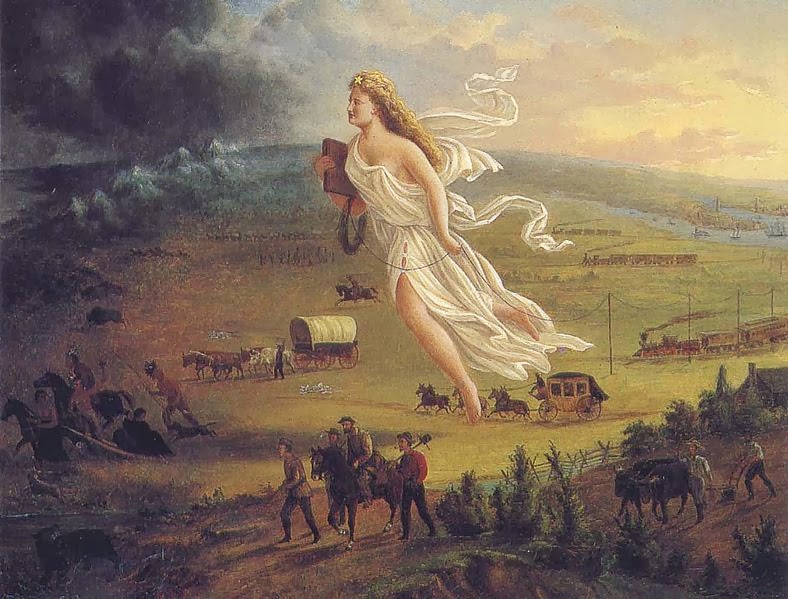
William Walker was a a pirate to some, a hero to others, but the contemporary view is that he was a wannabe conquistador with a serious Messiah complex. His support came from forces in Nicaragua who saw his firepower as an answer to their problems, and wealthy Americans who wanted to control the accessible transportation system across Nicaragua which supplied San Francisco with goods from New York (this was before both the Panama Canal and a transcontinental railroad). Taking advantage of a civil war erupting in the country in 1854, and with the help of the Democratic Party (of Nicaragua), he defeated the rival Legitimist party and declared himself head of state in September 1855. Walker's process was known as 'filibustering', which back then meant taking an unauthorized military expedition into a foreign country in the hopes of starting or supporting a revolution. This wasn't his first attempt- he tried 'filibustering' in the Mexican states of Sonora and Baja to unfulfilled ends- but he found success in Nicaragua, and inspiration in the ideals of Manifest Destiny. Manifest Destiny told generations of Americans that the North American continent was destined to be controlled by them, and it was an idea that found legitimacy in the political elite. President Franklin Pierce even recognized Walker's government the following year.

American Progress by John Gast, 1872
http://commons.wikimedia.org/wiki/File:American_progress.JPG
Walker's plans were a lot grander, however, and he looked to take on all of Central America under his utopian wing. He had pissed off some of the most powerful people in the America, including Mr. Cornelius Vanderbilt (played in the movie by Peter Boyle), who was not only one of the wealthiest people in the United States in the 1850s, but one of the wealthiest people in American history. After soliciting funds from two of Vanderbilt's former investors-turned-competitors, who were attempting to replace Vanderbilt's transportation system with a train, Walker found himself faced with an angry tycoon and a number of empires scared of his influence, including the British in Belize. When his tenuous grasp eventually gave out under intense pressure from neighbouring countries who did not, in fact, want to be 'emancipated', he surrendered himself to an American admiral in 1857 and made it back to New York and a hero's welcome. But you can't keep a good filibusterer down, and in 1860 he tried to return to Central America with plans to set up an English-speaking independent colony on the nearby Bay Islands. Unfortunately for him, he was captured by the British Navy soon after landing in Honduras. The British handed Walker over to the Honduran government, who executed him by firing squad on September 12, 1860.

Cox follows the general outline of Walker's life pretty faithfully regardless of the anachronisms, and he applied a dream-like filter to make the movie feel like a psychotic Western. Cox isn't subtle about Walker's politics; he filmed a movie about an American intervening in the affairs of Central America while America actively intervened in the affairs of Central America, so there's no other way to interpret it other than a strict condemnation of the long, bloody history of American influence in Central America since the Monroe Doctrine. Cox, in his own esoteric manner, firmly denounces the idea of Manifest Destiny and its 1980s equivalent, where American-approved right wing politics, no matter how authoritarian and violent, were better than any form of left-wing government.

He uses incredibly obvious anachronisms, from the aforementioned contemporary magazines to Zippo lighters, to make sure the audience realizes that what Walker did was no different than what the Reagan administration was doing at the time. In the movie, as his capital burns around him, black military helicopters and marines drop in unexpectedly to 'save' William Walker and his comrades. This references Walker finding salvation by turning himself over to American authorities when all of Central America was lining up to show him how they feel about his experiments in government. Cox is saying that no matter what the United States does, whether it's overthrowing a government explicitly or implicitly, the consequences will never hit close to home. The United States, its people and its interests will never feel the impact of its actions.

The people who did suffer those consequences are the ones America tried to save from themselves. With today's audience being so far removed from this history, combined with the sheer volume of contemporary leftist criticism, it seems like a rather cliched message for Cox to convey. But he conveyed it in the most direct way at a time when the country was at its most conservative; whether or not you agree with the politics, it definitely adds more gravitas to his and the film's legacy.

Monday, 18 November 2013

Reel History 13: The Death of Jesse James

When Jesse James was shot by Robert Ford on April 3, 1882, he was already a massive celebrity. America's love affair with Prohibition and Depression-era criminals- Bonnie and Clyde, John Dillinger, Al Capone- paled in comparison to its love for the James gang, who became out-and-out heroes among Confederates still holding on to whatever revenge fantasy they could grasp in the Reconstruction era; it helped that James was a former member of Quantrill's Raiders in Missouri (see Ride with the Devil), and that he appealed to his fellow Southerners in his letters to the media and by using Ku Klux Klan imagery in his robberies. James' legacy paints him as an American Robin Hood, robbing the rich and giving to the poor in dime store novels and folk tales, and it's a success in neo-Confederate propaganda.

But after killing James, Robert Ford had a rare opportunity not given to all assassins- going free and making money off his actions. Ford took what he could get and ran, capitalizing on the public's craving to see how the murder happened, and, not unlike his victim, parlayed his infamy into wealth. But even that can only take you so far.

Sam Fuller's first movie, I Shot Jesse James (1949), tells that story with a pretty liberal interpretation of what happened. It's a pretty standard Western, though it's mostly about the aftermath of Robert Ford's shooting of James than of James' life. James, now living in his hometown of St. Joseph, Missouri under the guise of Thomas Howard, was shot in the back of the head by Ford while dusting and straightening a picture on his wall. In I Shot, James is portrayed as a pastoral, quiet man, trying to leave his legacy behind and live a domestic life with his wife and children. Ford, of course, is a coward (see the title of the next movie), shooting his best friend and confidante so he could also leave the James legacy behind and live a quiet life with his fiance. This, I suppose, is a noble goal, especially since James was a cold-blooded killer wanted by the law, but Fuller doesn't hesitate to turn Ford into a crazy unhinged man. He has to wrestle with his conscience following the shooting, and the fame of being the man who killed the most notorious outlaw in the country doesn't mean much when that notorious outlaw happens to be a beloved folk hero.

Fuller fudges the details to create conflict, because hey, it's a cheap 8o minute Western where the most famous character gets shot in the first 10 minutes, you have to pad it with something. In the movie, Ford shoots James so he can earn the reward and move away with his fiance, who happens to have another suitor, a more dignified suitor at that. This rival is none other than Edward O'Kelley, the real-life murderer of Robert Ford, who shot him in the back in Ford's Creede, Colorado tent saloon in 1892. In the movie, O'Kelley is forced to shoot the drunken, deranged Ford, who is driven by jealousy to kill him first. In real life, O'Kelley gave no real motivation following his apprehension; it was suggested that he was driven by the same craving for notoriety as Ford, shooting Jesse James' killer as a quick way to heroism. 

Now, the same story was tackled in a movie that was twice as long as I Shot, and my goodness, it's just a better movie all around; even at almost three hours, it's never boring, unlike I Shot. The Assassination of Jesse James by the Coward Robert Ford is a beautiful, ethereal film, and a cautionary tale about meeting your idols, or maybe it's a good example of why you should kill them (with all due respect to Sonic Youth, of course). The movie came out in 2007 as part of an odd wave of unconventional Westerns, alongside There Will Be Blood and No Country for Old Men. I think it stands alongside those two as a modern classic.

It's different from I Shot in many ways, first and foremost in that it's actually a great movie, but also because it skews more to the actual story of James' life. Ford isn't driven by jealousy to kill James, he's driven by a craving for fame. He worships the James gang, and wants nothing more than to be part of the group that entertained him as a child. When he finally gains access to James' inner circle, and sees his hero for who he really is, he's taken aback; this is Jesse James? Assassination portrays James as unhinged, driven mad by the man-hunt. When Ford finally shoots him, James accepts it as inevitable. He doesn't give two craps about how the picture is hung, he just wants it to be over. He knows the walls are closing in, knows that the Ford brothers, the two people he could finally trust, have given themselves over to the other side. These motivations may or may not be true, of course, but taking a creative look at what you can't know (what they were thinking) is a lot better and more challenging than taking a creative look at what you do know (the actual course of events).

Both movies include similar details: the shooting, of course, but also that Robert Ford and his brother Charley re-created the assassination on stage for a paying audience in a touring show, a wandering minstrel singing an insulting song right in front of Ford (played in Assassination by Nick Cave, who also wrote the haunting score). But I Shot downplays the Ford brothers' show, making it seem like Robert gave up after the first show because of his conscience; he actually played the role of himself a lot, though it wasn't well received and showed the public how the murder was actually cheap and cowardly. 


Why Assassination works so well for me is that it actually makes Jesse James a character in the story of his murder, and it's not at all sympathetic. Brad Pitt (playing James) and Casey Affleck (playing Ford) give incredibly nuanced performances, and the story is complex enough so that the audience isn't forced to choose between the two. Fuller, on the other hand, barely features the outlaw in his movie at all, so that all we know about him is what knowledge we already knew, and thus James' legacy as a righteous bank robber is kept intact. But Jesse James wasn't a good person. There's no evidence he gave his ill-gotten gains to the poor, and his robberies ended with murder and often targeted Union-sympathizers or ex-soldiers. He was a brutal man leading a brutal group of people- one robbery in 1876 saw the gang crack the skull of the cashier and hold a knife to his throat in an attempt to get the combination to the safe; they were unsuccessful, and when the authorities were called and on their way one of the James gang shot the cashier as they made their escape.

This ex-Confederate soldier gets sympathy/praise in the same way ex-Confederates are sympathized with/praised in so many Westerns- he represented a cool, anti-authoritarian position in the lawless West, sticking it to the government trying to hold him down. Unfortunately, the people he represented were Lost Causers living vicariously through outlaws just as evil as they, only bolder and better with a gun. James doesn't deserve his legacy, and I think Assassination gets that.

Wednesday, 6 November 2013

Reel History 12: Glory and Ride with the Devil- black soldiers and the Civil War


Oh dear. I was dreading getting to 1861. Or, seeing as I've already gone past it in Gangs of New York and in the life of Abraham Lincoln, having to backtrack and do something definitive about that darn Civil War.

The Civil War, to put it mildly, is the defining moment in American history, which makes it a complex and overwhelming topic to tackle in a blog about movies. You can experience it in relatively straightforward movies such as Gettysburg, Gone With the Wind, and Cold Mountain; or you can take the lighthearted approach and see the Confederate pratfalls of Buster Keaton's The General. Civil War movies are vast because they don't just recount events, they use the war as a thematic background, so you're going to get a lot of variety.

Quick rundown, then: Lincoln is elected; southern states secede in 1860-61 fearing he'll roll over their rights as states to own people like cattle; the Confederate States of America destroy Fort Sumter, bombastically declaring war; bloody battles fought back and forth until the CSA surrenders in 1865. If you want more details, you'll have to read books (it's really interesting! I promise) or try and glean something from my past posts, but in the meantime, just know this: before the war, it was "the United States are..."; after, "the United States is..." Now the relationship between the states and the federal government is clear(er). Black people are STILL not fully considered people though, even in the northern states; many Union soldiers didn't think they were fighting to free 'the coloreds' until well into the war.

But hey, a lot of progress is made for the black population during the war, even if some of it is just gaining the ability to fight in a war. In March 1863, three months after the Emancipation Proclamation came into effect, the 54th Regiment Massachusetts Volunteer Infantry was formed by the governor of the state. The regiment was one of the first African American units in the Union Army, and it saw extensive action in the American Civil War. Commanded by Colonel Robert Gould Shaw (who was white, as Secretary of War Edward Stanton did not trust black people to lead their own units), they fought all over the country, ending their time at the Battle of Boykin's Mill in April 1865, one of the last battles in the war.

The 1989 film Glory tells the bittersweet tale of the 54th, with the oddly cast Matthew Broderick playing the role of Shaw. It's bittersweet because, and here's a spoiler even though it's a 24 year-old movie about a real historical event (I didn't know the outcome either), almost half of the 54th, including Shaw, were killed in a siege on Fort Wagner, South Carolina, on July 23, 1863. The 'sweet' of this event was that after the valour was recognized, it increased enlistment and use of African-American troops, something President Lincoln recognized as helping end the conflict.

This all was happening, appropriately enough, during the great New York draft/race riots as documented in the last half hour of Gangs of New York, and this dichotomy highlights the hardships of living as a black person anywhere in the United States, even in the north.

Glory is about as good a movie about the Civil War as one could get, and it's consistently praised for it's accuracy and the lack of forced stirring moments (they exist, but they're played rather well). What's unfortunate is that this is yet another film about the black experience in America that is told from the perspective of a white man. I know Shaw is an important part of the 54th's history, but there are other perspectives that could have been taken- either Denzel Washington or Morgan Freeman, for example, could have been the focus, as both are important and much more interesting characters. Washington even won an Academy Award for Best Supporting Actor; maybe it could have been upgraded to Best Actor.

Ang Lee's Ride with the Devil has a much different focus than that of Glory, in that the protagonists are Confederates (or the Missouri equivalents, known as Bushwackers) and they are fighting the anti-slavery, pro-Union Kansas Jayhawkers (who are coming over the border to fight, as Missouri is a slave state). So these are people not normally associated with 'good guys'. This of course makes it a much more complex movie, and it doesn't always work, but Ang Lee's style definitely makes the movie worthwhile.

In Ride with the Devil, Tobey Maguire joins a group of Bushwackers as they seek vengeance on raiding Jayhawkers; one of the gang just so happens to be a black man named Holt (played by Jeffrey Wright) who fights loyally alongside his former owner. Maguire's relationship with Holt is but one of the many complex relationships in the movie (the relationship with Jewel, for instance, takes up much of the latter half of the movie), and thus Ride overextends itself into boredom, but it's still a lovely film.

But Holt's motives in the movie are complicated, and he feels loyal to the Bushwackers (and Quantrill's Raiders, the infamous Confederate guerilla group with whom he and MacGuire end up joining) despite their motives being opposite to his well-being. You can see the pain in his eyes briefly when the Raiders are stacking up the bodies of black men after their massacre at Lawrence, Kansas. So, why'd he stay?

It's an excuse you here from Southern apologists all the time: black men fought to protect the South's right to secede, so the Civil War wasn't about slavery! It's kind of true, at least the first part- a couple thousand slaves did indeed fight for the Confederate Army, as they were allowed to fight as part of a last ditch effort to win the war in 1865.

The Confederates forced them, of course, because these weren't free men fighting for what they saw was right; Holt's motivations in Ride aren't political, but myopically personal. His former owner, George Clyde, goes out on a limb to defend Holt, saying he's one of the few men he'd trust with his life. I doubt Clyde would feel the same way about any other black man he'd come across, especially not if these black men fought for the Union. The 54th, like all black regiments, were under threat of execution if captured; Jefferson Davis proclaimed in December of 1862 that any captured black soldiers or their white officers were to be sentenced to death.

By the end of the Civil War, roughly 179,000 black men (10% of the Union Army) served as soldiers in the U.S. Army and another 19,000 served in the Navy. Nearly 40,000 black soldiers died over the course of the war—30,000 of infection or disease. 16 were awarded the Medal of Honor. But let's not forget the slaves who were forced to fight against their best interests- unlike their white fellow soldiers, they had little choice or stake in the matter.

NEXT TIME: Looking at Walker, a BIZARRE and oft-forgotten chapter of American colonialism, and then we catch up with an ex-Quantrill Raider and see what he's up to (hint: he's a famous bank robber!).
A recruitment broadside for black men in the north. Unfortunately, those who signed up were paid less than their white counterparts ($10 a month compared to $16 a month), and had to buy their own uniforms (as opposed to white soldiers, who were given a $3.50 clothing allowance).


Sources:

http://www.archives.gov/education/lessons/blacks-civil-war/

http://en.wikipedia.org/wiki/54th_Massachusetts_Volunteer_Infantry

http://www.history.com/this-day-in-history/confederacy-approves-black-soldiers

Monday, 21 October 2013

Reel History 11: Abraham Lincoln In The Movies

Abraham Lincoln was, and this is hardly debatable, the greatest president in the history of the United States. Some polls say Reagan, but those polls, and those who voted for Reagan on them, are wrong. Lincoln exists in Americana as the anti-Richard Nixon: he was a virtuous, honest, wonderful man and is celebrated for it, whereas Nixon was a mean, spiteful liar who was out for one man and one man only- Richard Nixon. These two presidents have been depicted on film more than any others, but the stories told about them couldn't be more different (more on Nixon later).

Abraham Lincoln, born February 12, 1809, was a self-educated country lawyer at a time when law was a profession that accepted self-made men. He became a Illinois state legislator in the 1830s, then a one-time member of the House of Representatives, but was denied the trifecta by rival Stephen Douglas, who defeated him in the 1858 run for the Senate; Lincoln did, however, win over the heart of the object of Douglas' affection, Mary Todd, so really, Lincoln got his (ok, ok, they were married all the way back in 1842, so maybe Douglas was the one exacting revenge). He did eventually win the highest office in the country, so who needs the Senate, really? But upon Lincoln's election in 1860, slave-holding states started seceding one after another in quick succession, fearing the president would free their property and violate their 'state rights' (used as an excuse to glorify the South even to this day, sadly). This divided the nation and laid the groundwork for the attack on Fort Sumter in April 1861 and the beginning of the Civil War. Lincoln wouldn't get to see the reformation of the union he worked so hard to achieve; he was assassinated by John Wilkes Booth on April 15, 1865, six days after Robert E. Lee and the Confederate army surrendered, and 25 days before the war formally ended.

Lincoln's story is this- virtue, hard work, and honesty, in office and out, will get you ahead; and while slyness and cruelty will also get you ahead, the former gets you hagiographies and enduring love, not demonization and hate. But hey, Nixon gambled and lost. History will see to that.

D.W. Griffith's Abraham Lincoln (1930) is one of the earliest movies about President Lincoln (but not the earliest; the first was made all the way back in 1909), and it tries to leave no stone unturned telling the story. The history of slavery, the Civil War, Lincoln's love life- everything is covered in a series of thinly connected scenes, some of which are in sound, some silent. It's odd for Griffith to cover Lincoln in such a sympathetic manner, considering he's the man who directed Birth of a Nation, a movie that glorified the Ku Klux Klan, but he does it. It's not a movie that holds up all that well, however, and is mostly boring and relatively plotless. Note that Lincoln is played by Walter Huston, who was also Mr. Scratch (a.k.a the Devil) in The Devil and Daniel Webster.


John Ford fared better in his 1939 movie Young Mr.
Lincoln, which starred the gangly Henry Fonda as Lincoln. As the title suggests, the movie follows Abe during his formative years as a lawyer, mostly in a fictional context. Lincoln in this movie isn't just virtuous, he's the best darn Illinoisan the state ever spit out- he's judging a pie eating contest, winning a rail splitting competition, and cracking up a jury with his hilarious antics. The movie surrounds a fictitious court case involving a fight and murder, with justice winning in the end. One thing that all four movies I watched make a point of including (to various degrees of success) is Lincoln's easy-going and joke-telling nature. He loved to make people laugh and tell stories, and that's partly why he was beloved by the citizens. The rather grim visage you see in pictures is often the result of both the Civil War and his family life wearing him down, but by all accounts he was a rather light-hearted and friendly person.


The movie (also Abraham Lincoln) includes the dubious detail of Ann Rutledge, Lincoln's supposed first love and his motivation for going into law. It's fierce debate whether or not she and Lincoln had a thing, but apparently it was first revealed after the assassination in 1865 by Lincoln's law partner William Herndon. Herndon hated Mary Todd Lincoln, and told the story much to her dismay, so it's possible it's fake, or at least embellished.


Steven Spielberg's appropriately named film Lincoln covers at least some of the part not covered by Ford. It's also probably the definitive Lincoln movie, one that, however you feel about biopics, manages to convey his true character and the problems he faced dealing with the Civil War and at home. The movie is about the last four months of both the Civil War and his life, as he tried to pass the 13th Amendment through the House before his second term was to begin and the country was to eventually be reunited (with the slave states back in the Union). This amendment would formally abolish slavery, as the Emancipation Proclamation two years earlier was not law but a wartime measure and could easily be overturned by the court once the war was over. The movie is loosely based on Doris Kearns Goodwin's book Team of Rivals: The Political Genius of Abraham Lincoln, so Lincoln's genius is first and foremost in this movie. I may have denigrated Nixon's craftiness up there, but Lincoln had his fair share of it. The difference is Lincoln used it to free the slaves before time ran out and it became a fruitless pursuit; Nixon used it to maintain an iron fist over the White House, get re-elected, and bomb Cambodia.

With Lincoln, Spielberg may have directed the best movie about the man ever, and Daniel Day-Lewis the best performance. I know it's not saying much considering, but it's a wonderful, interesting biopic in a mostly maligned genre.

2012 truly was the year of super accurate Lincoln biopics, continuing with the supremely stupid Abraham Lincoln: Vampire Hunter. Benjamin Walker is the Lincoln here, looking more like a young Liam Neeson than the sixteenth president, and he uses his rail splitting powers (under the most BS of pretenses) to hunt... vampires. Turns out, the Confederates were using slaves as a source for blood! And there's a Linkin Park song played over the credits. That should tell you everything you need to know about this movie. Seriously, it's infuriating how much this movie sucks.

Covered in tons of crappy CGI blood, this telling of Lincoln is clearly trying to be some kind of pulpy, stupid action movie, but there's too much weird self-importance that comes with taking such a beloved individual and hewing very close to the events of his real life while at the same time having him fight vampires. There's something incredibly off about having the Gettysburg Address recited over Union soldiers killing vampires at the Battle of Gettysburg. But what's even worse is using the death of his son Willie, and the grief he and Mary suffered, as some cheap emotional moment. Mary Todd's mental breakdown after the death of Willie was real; the vampire that killed him was not.

And that's why I hope they stop taking real history and trying to make it 'awesome'. Lincoln's life is already awesome enough, full of pathos, meaning, and moving stories- what good does it do to try and turn him into a superhero? It's completely unnecessary and at times, down right disrespectful.

There are tons more Lincoln-y things: he's been played by Robert V. Barron in Bill and Ted's Excellent Adventure,  Gregory Peck in a 1982 TV movie called The Blue and the Grey, and by Sam Waterston in not one, but TWO different TV shows. He's been portrayed in Bioshock Infinite and Late Night with Conan O'Brien and Doctor Who. He's pretty much everywhere, and that's because he's the virtuous president.

If you stripped all partisan politics out of the question, Lincoln would hands down be polled the greatest American president, and no poll saying otherwise will ever take away his status in politics or culture. Can you imagine Reagan traveling with Bill and Ted?

NEXT TIME: Looking at the Civil War a little more closely with Glory and Ride with the Devil.

Tuesday, 1 October 2013

Reel History 10: Gangs of New York

When gangsters dressed like Batman villains
Imagine you're new to the United States- you've just arrived and settled in and everything is straight-up bonkers: all the currency looks the same! What, gallons instead of liters? It's the 21st Century and this country is still not using the metric system? Why are there so many ads for medications on TV? Where can I get a maple log? etc., etc. I am assuming most of the people reading this are from Canada, so it's safe to say the culture shock would be less than monumental. 

Now imagine you've arrived back to the 1850s. As an immigrant, you might be German- 5 million arrived between 1850 and 1930- or an Irish Catholic looking to escape famine- 4.5 million Irish arrived between 1820-1930. You'd head to a large urban center, like New York, looking for a job in the emerging industry of the northern Unites States. As you arrive at the port, perhaps you're greeted by an opportunistic politician who sees you as nothing more than a walking vote; maybe an angry hordes is shouting at you to go back to your home. Maybe you walk right into a conscription line to join the Union Army, like the 144,000 other Irish or 177,000 other Germans. Or maybe, given your temperament, you take up with another army, one that would defend your right to live in New York.

Gangs of New York concerns itself with the last group, telling the story of those who chose to brawl it out in the streets for protection and influence, political or otherwise. Martin Scorsese's movie deals with warfare at Manhattan's Five Points district, the convergence of five streets that happened to be one of the city's most notorious slums, an area dominated by a number of large gangs. While most of the characters are fictional, the gangs of Gangs are not- the Bowery Boys, lead by Bill 'The Butcher' Cutting (played by Daniel Day-Lewis, the best performance of the movie) and the Dead Rabbits of our protagonist Amsterdam Vallon (Leonardo DiCaprio), were very real, and just two of many different gangs representing many different interests.

Even Charles Dickens was less than impressed with the scenery- here he describes the Five Points in his American Notes for Circulation:
"What place is this, to which the squalid street conducts us? A kind of square of leprous houses, some of which are attainable only by crazy wooden stairs without. What lies behind this tottering flight of steps? Let us go on again, and plunge into the Five Points."
"This is the place; these narrow ways diverging to the right and left, and reeking everywhere with dirt and filth. Such lives as are led here, bear the same fruit as elsewhere. The coarse and bloated faces at the doors have counterparts at home and all the world over."
"Debauchery has made the very houses prematurely old. See how the rotten beams are tumbling down, and how the patched and broken windows seem to scowl dimly, like eyes that have been hurt in drunken forays. Many of these pigs live here. Do they ever wonder why their masters walk upright instead of going on all fours, and why they talk instead of grunting?"

It was also packed with newly arrived immigrants, a sizable African-American community, and very, very territorial 'natives'. And from this convergence of poverty-stricken groups is where we get the movie's tension. It begins with a fight between the Dead Rabbits, a gang of immigrants lead by a priest played by Liam Neeson, and the Bowery Boys, lead by Bill the Butcher, 15 years before the Civil War. Neeson is killed, the Dead Rabbits are broken up and declared illegal by Bill's tyrannical street rule, and Neeson's son escapes the clutches of an orphanage. The story resets in 1862 with the son, now a fully grown Leonardo DiCaprio, working his way up the gangland hierarchy to get his revenge on Bill, which involves, in classic gangster fashion, getting close to his most hated enemy.

There's so much history in Gangs it's amazing- the history of the Five Points, sure, but there's the Civil War, PT Barnum, Boss Tweed and his gang at Tammany Hall, American nativism and its reaction to Irish immigration, the draft riots of 1863 against lopsided conscription, and so much more. America's early history is soaked in blood, and it reminds us that while the Fathers may have crafted one of the best republics on paper, the sailing was never smooth.

I like Gangs of New York a lot, but it's certainly one of Scorsese's more Hollywood offerings, which I think makes it a lesser movie in his oeuvre. He's a master at telling the stories of the personal lives of low level criminals, with movies like Mean Streets and Goodfellas being bona fide classics; and while he's certainly concentrating on the criminal element here, there's a scope that's far outside just the small time crooks. I was far more interested in learning more about the history of the movie than the actual plot, because while in Daniel Day-Lewis we get one of Scorsese's great villains with his performance as Bill 'the Butcher' Cutting, in Leonardo DiCaprio's Amsterdam Vallon we get one of his more boring protagonists. The Departed does essentially what Gangs does, but in a much more claustrophobic, tense, and ultimately entertaining manner. Gangs also suffers from a rather anti-climatic final act, with Bill and Amsterdam fighting in a cloud of smoke while the city riots around them; Bill is struck by the gunfire and is ultimately finished off by Amsterdam. The ending is pretty beautiful, though.


One thing that Scorsese makes clear is that this sense of 'otherness' created by nativists like Bill the Butcher still included black people. Despite New York's inclusion in the Union, it still wasn't safe to be a free black person in a large city, and the draft riots of 1863 quickly turned into race riots. In the movie, Amsterdam's friend Jimmy Spoils is easily spotted and killed by rioters; in real life, it's estimated that 100 black people were killed in the three days of rioting, and many abolitionists and black homes were targeted.

So while Gangs of New York shows a pretty bad side of New York, the reality probably was worse than any movie can convey. Herbert Asbury, the author of the book that Gangs was based on (yes, it was based on a book!), says that in 1862, more than 82 thousand New Yorkers, 10 percent of the population, were arrested by police. In 1862 alone!

Kinda makes you wonder what other great movies could be made about this same era.

NEXT TIME: Abraham Lincoln- one great citizen.

Thursday, 26 September 2013

Reel History 9: Amistad

In 1839, a Spanish ship named La Amistad, transporting 53 Mende slaves from one Cuban port to another, was taken over by its cargo, who killed the captain and most of the crew. The former captives, led by Sengbe Pieh (or Joseph Cinque, his given American name), demanded that the ship's navigator take them back to Sierra Leone, but he instead took them to Long Island, New York, where they were detained and endured a two-year long debate over their legal status. Were they free Africans or Spanish property, and where were they to go?

Amistad is the story of not only those slaves and their legal struggles, but of the United States as a whole and its struggle with slavery. In this movie we are given a tour of the American slave mentality, traversing the countryside with Martin Van Buren (seen stumping for the next election at a time when politicians didn't stump) and John C. Calhoun as they speak about impending war and black people's freedom, a crash course on the main players in anti-abolitionism. This is the problem with the movie; in an effort to give it lots of context and place it within the history of abolition, it compresses history in an effort to tell a stirring story.

And you can't say that Amistad isn't stirring. It's a Steven Spielberg film- heck, it might be THE Spielberg film. If you took the elements that Spielberg is both praised and criticized for, Amistad has them all- the swell of the score as Djimon Hounsou shouts 'give us free!' over and over again; the speech Anthony Hopkins as John Quincy Adams gives to the Supreme Court which convinces them to give the Mende their freedom; the overly emotional moments towards the end that, depending on the viewer, may break down the rest of the movie (see: Schindler's List and Saving Private Ryan). Some will think these things are beautiful and they resonate with them emotionally; others think it hokey and cheap. I am inclined to go with the latter more often than the former, but it's a long movie with lots in it; I will say definitively that Anthony Hopkins as former president and legal representative John Quincy Adams is the best (former) presidential performance I've seen in a movie yet, so there's a plus.

But Spielberg's methods mean that the history offered in the movie, however emotional, isn't exactly true to life. Eric Foner, professor of history at Columbia University and a man much more qualified to talk about historical inaccuracies than I, runs through some of the problems of the movie in this article. But if you're not inclined to read that, here are the problems that match the thesis of this here blog post: the characters of the movie are constantly bringing up the impending Civil War (which was twenty years in the future), and talk about the case as if it has a bearing on slavery at home (when it fact it was all about the international slave trade, which had been outlawed).

The latter issue is the bigger one. The movie revolves around lawyer Roger Baldwin (played by Matthew McConaughey) realizing that slaves aren't property, they're people. Apart from making white people the focus of yet another story ultimately about black people, it doesn't reflect the truth about slavery in America. As Foner says:
Most seriously, Amistad presents a highly misleading account of the case’s historical significance, in the process sugarcoating the relationship between the American judiciary and slavery. The film gives the distinct impression that the Supreme Court was convinced by Adams' plea to repudiate slavery in favor of the natural rights of man, thus taking a major step on the road to abolition.
The Amistad case is made more important than it actually was; Foner again: 
Incongruous as it may seem, it was perfectly possible in the nineteenth century to condemn the importation of slaves from Africa while simultaneously defending slavery and the flourishing slave trade within the United States. 
He highlights another case of slave revolt, this one with a less pleasing American slant:
In October 1841, in an uncanny parallel to events on the Amistad, American slaves being transported from Virginia to Louisiana on the Creole seized control of the ship, killing some crew members and directing the mate to sail to the Bahamas. For fifteen years, American Secretaries of State unsuccessfully badgered British authorities to return the slaves as both murderers and “the recognized property” of American citizens. This was far more typical of the government’s stance toward slavery than the Amistad affair.
Another less-than-fun fact that sheds a less-than-flattering light on the Supreme Court: 16 years after the Amistad case in 1857, the Court made their landmark decision in the Dred Scott v. Sandford argument, saying that African Americans, free or not, were not and could not be American citizens and therefore could not sue in federal court, and that the federal government had no power to regulate slavery in federal territories acquired after the founding of the nation. A 7-2 ruling, this case was much more a factor in the inevitable Civil War than the Amistad case, but it seems Spielberg just couldn't resist giving that power to his own movie, albeit with a more positive spin for the Court and the country.

But hey, as a bit of history, it's one that definitely needs to be told. It's just not as important as Spielberg is leading us to believe.

NEXT TIME: Gangs of New York, violence, and immigration

Monday, 16 September 2013

Reel History 8: Django Unchained, the past, and the present.

Here be spoilers to a recent, high profile movie that you may or may not have seen! Advance cautiously. 

I had a former Facebook friend (henceforth known as FFF) who once wrote that slavery was a 'Hollywood problem'. This came after he wrote a status 'rhetorically' asking why, if so many black people are lining up for welfare, do we not reinstate slavery? (his response to no one taking this bait betrayed his true beliefs). I assume he meant American slavery, my FFF being inspired by the embarrassing American reconstructionist Rousas Rushdoony, and that he took kindly to Rushdoony's view that American slave owners were benevolent overlords (Rushdoony also said that interracial marriage was 'an unequal yoking' and opposed integration). I deleted him not long after he posted this, but I still think about it from time to time, especially when reading about the lives of people like Frederick Douglass. If I and FFF were still friends and I felt the need to respond to his question, I might post something like Abraham Lincoln's Second Inaugural Address, 1865:
"Woe unto the world because of offenses; for it must needs be that offenses come, but woe to that man by whom the offense cometh." If we shall suppose that American slavery is one of those offenses which, in the providence of God, must needs come, but which, having continued through His appointed time, He now wills to remove, and that He gives to both North and South this terrible war as the woe due to those by whom the offense came, shall we discern therein any departure from those divine attributes which the believers in a living God always ascribe to Him?
Or I might say that black poverty in America is the result of many factors- cycles of poverty; blatant discrimination (Jim Crow) and subtle discrimination (red lining, white flight, busing); I might point to violence against civil rights leaders and black Americans who had the audacity to believe they were just as worthy of respect as their fellow white Americans, or that the rules Rushdoony wants to abide by would allow FFF to sell his daughters into slavery if he finds himself in a financial pickle. But the thing is, his comment is part of a resurgent pattern of forgetting the vast sins of the past by focusing on the particular sins of the present. Not just in comment sections on news stories (as per the Internet @#$%wad Theory coined by known Internet @#$%wad Mike Krahulik) or on that occasional echo chamber of racism and sexism that is Reddit, but in actual, 21st Century political and cultural opinion: John Derbyshire's 'The Talk'; Jason Richwine, (formerly) of the Heritage Institute, writing a dissertation concluding that "no one knows whether Hispanics will ever reach IQ parity with whites, but the prediction that new Hispanic immigrants will have low-IQ children and grandchildren is difficult to argue against"; the ongoing debate about what the Civil War really was about- slavery or merely states' rights?; whether slavery was really all that bad because back in Africa they sold slaves all the time! and even so they didn't really have it so bad here (see the awful revisionism of Rushdoony may he never gain real traction in Christianity); the anticipation of black rioting after Do the Right Thing ("dynamite under every seat" said one critic) or the Trayvon Martin verdict; leaders like Michele Bachmaan and Rick Santorum signing a petition saying that enslaved black children were more likely to grow up in a stable home environment than the black youth of today; etc., etc. On and on it goes, revising history to make people feel better about today.

All this makes the timing of Quentin Tarantino's Django Unchained more understandable. At first, it seemed like Tarantino was just making his way through history's greatest oppressions and turning them into revenge thrillers; first Inglourious Basterds had Jews getting the ultimate revenge on Adolf Hitler, now Django has a black freed slave shoot the living heck out of a plantation full of white people. You're left anticipating what atrocity he could pick up next- the Israelites in Egypt, perhaps?


But Django isn't part of a bloody, stylized travelogue through history. Django is a response to the present, and QT is using a story of an ennobled free slave as a big 'screw you' to anyone seeking to lessen the atrocities of the past and their legacy. Its colloquialism could be seen as disrespectful to the memory of enslaved Americans (Spike Lee certainly thought so); its pulpiness could be seen as a reduction of the awfulness, much in the same vein as the people I listed. But I don't see it that way. Tarantino has a genre style and loves exploitation, and he can deal with issues that couldn't be touched by the filmmakers he admires because of their own nationality (Sergio Leone, for instance). I wouldn't call it reducing atrocities for entertainment- watching slaves get whipped and torn apart by dogs is hardly entertaining- but rather bringing an issue into a sphere Tarantino knows best.

Django Unchained is the story of a slave named Django, unchained by the bounty hunter Dr. Schultz because he needs Django's help identifying some wanted men. The two become a team and, after finding the men, go on a virtual warpath, killing and collecting the bounties on the South's worst criminals. Their goal quickly turns to finding and freeing Django's wife from a plantation known as Candyland, owned by the evil Calvin Candie (a villain Tarantino says was the first one he actually hated). The scene in which Candie gives a speech on the phrenology of black people is almost as tense as the barroom card game in Inglourious Basterds, and truly is one of Tarantino's best.

Let's focus on some of Tarantino's historical...uh, reinterpretations, which are completely intentional and calculated so as to directly oppose the revisions of people who romanticize the antebellum South. The KKK, which is lampooned in the movie's funniest scene, wasn't formed until after the Civil War (the movie takes place in 1858, three years before the attack on Fort Sumter and the beginning of the war; though to be fair, the movie portrays them as the Regulators, not the KKK); as William Jelani Cobb of The New Yorker put it,  "there are moments where this convex history works brilliantly, like when Tarantino depicts the Ku Klux Klan a decade prior to its actual formation in order to thoroughly ridicule its members’ veiled racism."

There was also no Mandingo fighting, none that is documented anyway. It was against the economic self-interest of the owners to pit their slaves against one another, so say the experts. But the absolutely brutal Mandingo fighting scene is based less on reality than one of Tarantino's favourite movies: a blaxpoitation film called Mandingo, wherein a slave is trained to bare-knuckle box other slaves. I haven't seen it, but given Tarantino's enthusiasm and Roger Ebert's distaste, it sure sounds like an... interesting movie.

The movie, if you haven't realized, is incredibly violent, and the gory repetition of the violence makes it quite an uncomfortable experience. Take the repeated flashbacks to the dogs pulling apart a runaway slave that haunt Schultz, or when Django shoots Candie's sister (Candie himself killed by Schultz earlier in the film) without a flinch. The latter scene and the other executions surrounding it is Django's 'shooting-Hitler-in-the-face' moment, a use of extreme violence to keep the film in its exploitation corner all the while blow away the monsters of history, monsters who are also human and not totally unlike you (look at Hitler enjoying the movie of Allied soldiers getting shot and ask yourself, 'did I not have that expression watching him die?').

Tarantino sets out to challenge taboos, to make us flinch and think and grab the edge of our seat all at the same time. He doesn't reduce the violence of history so much as shove it in our face; not just the whippings or the dogs, but the all-too-real belief in the 'science' of phrenology and all the biological and social justifications it represents, my FFF's regards on the subject included. Quite frankly, FFF's comment that slavery is a 'Hollywood problem' is just a part of the expectation that fits the comfort of non-black people, aggressively opposite to white guilt; slavery ended 140 years ago, and the Civil Rights era more than 40- give us a break! Give up your cultural standards because hey, we're no longer racist, quit blaming the past!

Bullshit, says Django Unchained- loudly, aggressively, and defiantly. 

NEXT TIME: Amistad and the problems of inspirational Hollywood stories. 

Here's some of the main cast addressing the movie's critics. Jamie Foxx gives some good perspective on his character Django.


And for a really interesting map of the slave populations during the Civil War period, a map used by Abraham Lincoln himself, go here. If you're less inclined, here's a table from that map with the slave populations around 1860. Mississippi, where Candieland is located and the subject of a future blog post, has a slave population higher than its free population (as does South Carolina).


Thursday, 12 September 2013

Reel History 7: Jefferson in Paris and slavery on film

Jefferson in Paris seems like your typical Merchant Ivory film: a long period-piece with lavish production values, repressed sexuality due to social norms, etc. And it's a fine movie, I suppose- I think Nick Nolte was miscast in the leading role as Thomas Jefferson, as he kind of looks too grizzled and angry. Compare him to Ken Howard, who played T.J. in 1776.

Nick Nolte- People Magazine's Sexiest Man Alive, 1992
The movie is about Jefferson's time as a diplomat to France, and his love life there- the affair with Maria Cosway (she of the 'jump a fence and break a wrist' incident), and his follow-up relationship with his slave (and half sister-in-law) Sally Hemmings. The Hemmings affair was something that was denied for a while, but reading more recent biographies of T.J., it seems historians just accept the overwhelming evidence that he had an affair with a slave and she had several of his children. Jefferson in Paris, which doesn't really have a good focus on one thing or another, includes this matter and does it tastefully and well, as you would expect from Merchant Ivory.

Jefferson in Paris has it pretty easy when it comes to telling a story of slavery- Jefferson was, like the title suggests, in Paris, and thus mostly avoids having conversations about race and the hundreds of slaves he owned over his lifetime, or the hundreds of thousands owned by many throughout the United States. It focuses on just two: James Hemmings, the slave Jefferson took with him and had trained as a French cook, and James' sister Sally who came to France taking young Polly Jefferson to her father. Once they step foot in France, the two Hemmings are free, so during the film they are technically paid workers and not slaves (though Jefferson makes it clear the situation won't stay the same when returning to America). And though the conflict comes up, it's just one of several conflicts the movie feels compelled to address.

And that's something seen in movies about this time; it's a monumental task to take on the institution of slavery, and, let's face it, futile to tackle in one or two movies. But that doesn't stop someone like Steven Spielberg from trying to jam it all in anyway. It's a complex history with debatable beginnings- slaves came with some of the first Dutch colonists to Jamestown to fill the need for labourers on tobacco plantations, but how it became a full-blown American institution, even as it was banned in Great Britain, is so complex that it's hard to get an exact answer to the question. But, by and by it became an awful way of life and early America wasn't going to let it off easy.

And the Founding Fathers had complex views on it and clashed about them all the time. In an original passage of the Declaration of Independence, Jefferson condemned Britain for bringing slaves in the first place. The passage was unanimously voted out by the Continental Congress:

"he has waged cruel war against human nature itself, violating it's most sacred rights of life and liberty in the persons of a distant people who never offended him, captivating and carrying them into slavery in another hemispere, or to incure miserable death in their transportation hither. this piratical warfare, the opprobium of infidel powers, is the warfare of the Christian king of Great Britain."

Unfortunately, Jefferson could never bring himself to break away from slavery; he owned thousands of acres of land and owned hundreds of slaves over his life, only freeing the children he had with Sally Hemmings when they turned 21. He did, as president in 1807, forbid the United States from participating in the international slave trade, but there were enough slaves already in the country to keep the market thriving.

Compare him with John Adams, because once you do it becomes hard to write off the great Jefferson's beliefs as of the times. Adams never owned a slave, always employing 'freemen both as Domesticks and Labourers, and never in my Life did I employ a slave' (as he put it in a letter to abolitionists in 1801). His wife, Abigail, after an epidemic of dysentery ripped through Adams' hometown of Braintree, she wondered whether it was God's punishment for the sin of slavery. But even John Adams wanted slavery to be eradicated in a slow, steady way. He believed that slavery was already on the outs, which, though Adams was a smart guy, was a stupid assumption.

I've had a tough time writing about slavery in film, so I may have to take the movies dealing with slavery one at a time. Either the movie tries to compress to much history to make the story feel more significant than it was (Amistad), or they just don't give a sh!t and just take the oppression and use it to fuel a story of vengeance (Django Unchained). I'll say this now, Django is much more entertaining than Amistad, but that doesn't mean it has something more profound to say about slavery (or does it? Maybe it's a stupid question to begin with). I can't wait to see 12 Years a Slave, Steve McQueen's newest movie about a free black man captured and sold back into slavery, which I'm sure has more to say than either movie.

Wednesday, 4 September 2013

Reel History 6: The Devil and Daniel Webster

It's 1840, we're in the midst of Jacksonian Democracy, and America is still seen as a collection of loosely unified States (they say 'the United States are rather than 'the United States is' and so forth). One man rises above to protect the innocent farmer from those who would take what's his- and that man is Daniel Webster.

Note: Some of this piece comes straight-up from a post I wrote last October; bear with me and my self-plagiarism.

It's just after Labour Day as I write this, which means that summer is done and we all just stop pretending we like the beach and let autumn, the greatest season of all, take over. There is nothing I don't like about fall- the cool weather, the leaves, the fact that football becomes bearable to watch just by virtue of the climate. It's great!


There's also this aura of spookiness that pervades everything, not only because of the impending Halloween season. Maybe it's that after the sheer brightness of summer, everything becomes a little more muted- it becomes darker sooner, the foliage starts fading, and you could almost feel ghouls and specters walking down every little path in the crisp evening air. And it's this time of year that I like to enjoy a little favourite of mine, a movie about history's greatest monster: no, not Jimmy Carter, THE DEVIL. The Devil and Daniel Webster, an oft-overlooked 1941 classic, pits one of the greatest orators of the pre-Civil War era, Daniel Webster, in a courtroom against the Devil, for the soul of one Jabez Stone.

In this movie, the Devil, or Mr. Scratch, as he is known in the tale (they dubbed the anthropomorphic Devil 'Old Scratch' in the Faustian tales of New England, tales probably influenced by German settlers to the New World), is hardly scary at all, at least from the audience's point of view (though I wouldn't want to meet him on some dirt road in the middle of the night). The Devil of The Devil and Daniel Webster hardly seems like the Biblical Satan, more like a mischievous imp whose sole purpose is to make deals with local farmers for their souls. And it's not like Jabez Stone was Job- he was angry, reluctant to go to church, and continually consarn'd it around his wife and mother, hardly a model soul.  

The Devil really let himself go

But that makes sense, I suppose: legends like the one this story is based on (the movie is based on a short story of the same name, written in 1931, which is in turn based on a story by Washington Irving written in the real time of Daniel Webster) put really small regions in the center of the universe, so it makes sense that the Devil would have the time to walk around the New Hampshire countryside, waiting for some poor sap to make the decision to sell his soul for riches and a hot Devil-mistress. And [spoilers!] Daniel Webster wins it in the end, another triumph of American ideals over the forces of evil.

The movie is great, in the It's a Wonderful Life vein but with less sap and more spook. There are many creepy scenes, like when the shadow of this pig-nosed demon is tempting Daniel Webster, or the ghoulish courtroom climax full of America's greatest villains straight from the bowels of hell. It also mythologizes a completely different time in American culture, telling a tale of a man who was good at speaking, thus making him worthy of tall tales and the public's adulation. Daniel Webster was one of the 'Great Triumvirate', three American Senators- Webster, a representative of Massachusetts, John C Calhoun of South Carolina, and Henry Clay of Kentucky, and these men are still famous for the way they dominated the Senate with their debating skills.

If you've ever been a college sophomore and read Neil Postman's Amusing Yourself to Death and went into a Huxlean, anti-cold medium state of mind, you'll know Postman extols the virtues of the Stephen Douglas-Abraham Lincoln debates, ones that went on for hours and attracted crowds from all over, and how these debates would never happen on TV, where the soundbite is king. Daniel Webster is firmly in the Lincoln-Douglas tradition (well, of course he was, he died 1852, only six years before those debates began), and pitting him against the Devil highlights just how good an orator he was considered to be- he's the best candidate to have take on the trickiest entity in the universe and it makes sense to have him win. It reflects him accordingly; his ' Second Reply to Hayne' is considered the most eloquent speech ever delivered to Congress, and the whole debate with Robert Hayne of South Carolina just kinda happened, no game plan needed.

Who would be our contemporary Daniel Webster? A politician like Barack Obama or Ron Paul? A lawyer like Johnny Cochrane? A 'newsman' like Keith Olbermann or Bill O'Reilly? Quick, think of a politician or famous lawyer (haha) you support and think about why you like him/her. Is it their speaking skills? Do we value our leaders being able to debate and defend what they believe on their feet, off the cuff, for hours at a time? Debate today belongs to the realm of Christopher Hitchens and William Lane Craig, and they now act as sideshows, when they were once the highest form of political conversation.

Back to Mr. Scratch. In New England, circa one of their Great Awakenings, it's understandable that the Devil was the scariest of all monsters, made all the scarier if you thought you could encounter him on some forest path or in the back of your barn. Like the witches of The Crucible, everyday malevolence was easier to believe in 19th Century, rural America. This story would be something you'd tell your kids to scare them straight, and the movie's strength lies in its capturing the feel of the time period. The setting was a time when unexplained phenomena could be explained convincingly with the epitome of evil. In the book Oddities: A Book of Unexplained Facts, author Rupert T. Gould recalls an incident in England, 1855, around the same time of The Devil and Daniel Webster, where a long series of hoof-marks were noticed criss-crossing the countryside in freshly laid snow. In a newspaper article, "Richard Owen" recounts:

The superstitious go so far as to believe that they are the marks of Satan himself; and that great excitement has been produced among all classes may be judged from the fact that the subject has been decanted from the pulpit.

These days, even the most religious attribute Satan to far subtler activities, and you'll be hard-pressed to find anyone who thinks the Devil or his demons will take the form of a human to outright trick you out of your soul. But this was the belief of the times- not only among popular, back country folklore, but among the preachers and teachers, the ones who held the most influential opinions.

NEXT WEEK: Leading up to the Civil War, looking at slave culture and how people- both real (Amistad) and fictional (Django Unchained)- fought back.